If you want one walk that shows you the wild, high side of the valley, the Kashmir Great Lakes Trek is it. Over roughly a week you cross alpine meadows, step over snow bridges, and stand beside a string of glacial lakes that change colour as the light moves. This guide walks you through the route, the day-by-day stages, how hard it really is, the best season, the fitness you need, and what to pack so your first big Himalayan trek goes well.
What the KGL trek is, and why people love it
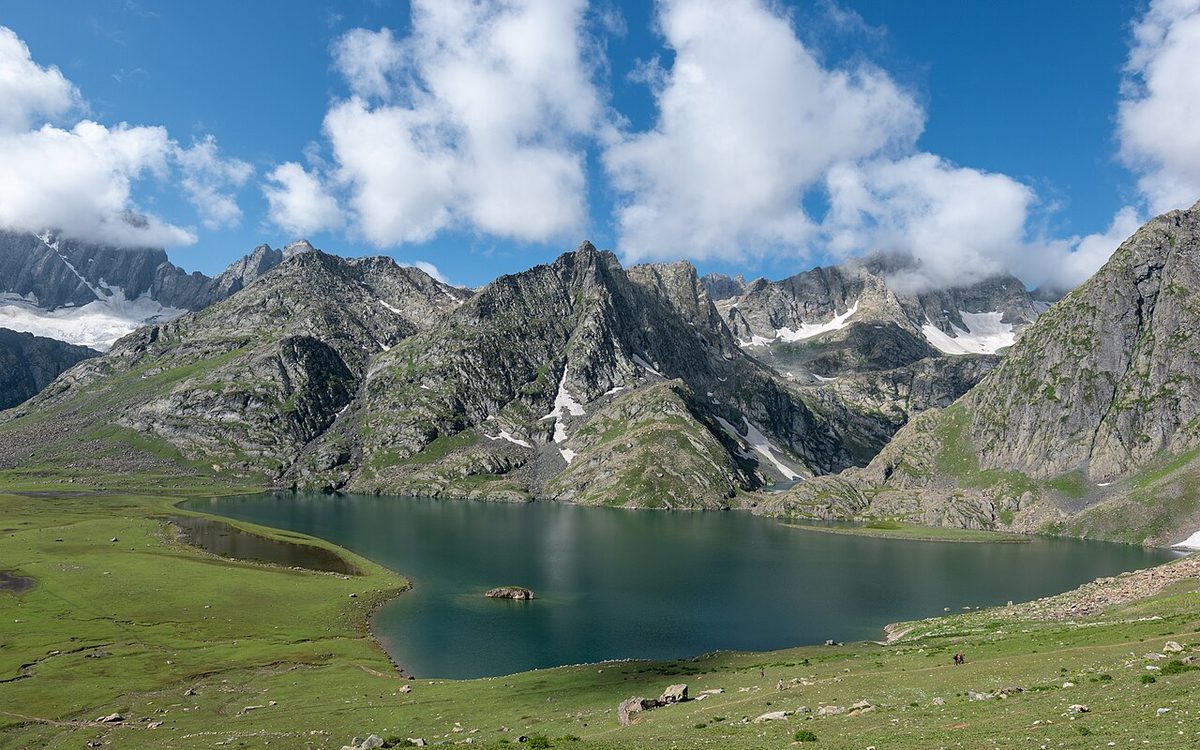
The Kashmir Great Lakes Trek, often shortened to the KGL trek, is a high-altitude loop that links five or more glacial lakes above the Sonamarg region. You start near Sonamarg, climb into the meadows of Nichnai, and spend the following days hopping from one lake basin to the next: Vishansar, Krishansar, Gadsar, Satsar, and finally the twin Gangbal and Nundkol lakes under Mount Harmukh.
What makes it special is the sheer density of scenery. Most treks give you one big view and a lot of forest in between. Here, almost every day ends at water, with grazing meadows, sheep, and Gujjar shepherd camps along the way. If you have read our take on Sonamarg, the meadow of gold, picture that landscape going on for a week, climbing higher each day.
Difficulty, and who it suits
This is a moderate-to-difficult trek, not a beginner stroll. You will walk six to seven hours on most days, cross several passes above 4,000 metres, and camp without any road access for the whole route. None of it needs technical climbing or ropes, but it does ask for honest fitness and the patience to walk slowly at altitude.
- Good first big trek: if you already walk, run, or hike regularly, this is a realistic step up from short day treks.
- Not ideal for: anyone who has never walked long distances, or who cannot train for a couple of months beforehand.
- Age: fit teenagers and people well into their fifties finish it every season. Fitness matters far more than age.
Best season for the Great Lakes Trek
The window is short. The trail is only open and reasonably clear of deep snow from early July to mid-September, and that is the full season.
- July: meadows at their greenest, some snow still on the high passes, lakes partly frozen early in the month. Wildflowers are at their best.
- August: the most settled walking weather, passes clear, lakes fully open and deep blue. The busiest stretch, so camps can feel crowded.
- Early September: quieter trails, crisper air, the first autumn tones in the grass. Nights get cold fast.
Outside this window the passes hold too much snow and the camps are unsafe. If you are still deciding when to come to the valley at all, our guide to the best time to visit Kashmir puts the trek season in context with everything else.
The route and the lakes
The classic line runs roughly like this, starting from Sonamarg or the nearby trailhead at Shitkadi and finishing at Naranag:
- Sonamarg to Nichnai: a steady climb out of the pine forest into open meadow, your first camp around 3,500 metres.
- Nichnai to Vishansar: over the Nichnai pass, then down to the Vishansar lake basin, with Krishansar lake a short walk above.
- Vishansar to Gadsar: the hardest day, crossing the Gadsar pass, the highest point of the trek, before dropping to the flower-rimmed Gadsar lake.
- Gadsar to Satsar: a gentler walk to a cluster of smaller lakes known together as Satsar, meaning the seven lakes.
- Satsar to Gangbal: a rocky up-and-down day over the Zaj pass to the twin lakes of Gangbal and Nundkol, right under Harmukh.
- Gangbal to Naranag: a long descent through meadow and forest to the road-head village of Naranag, where the trek ends.
Some operators run it in the reverse direction, from Naranag up to Sonamarg. Both work. Going Sonamarg-first gives you a gentler build-up in the early days, which many trekkers prefer.
Fitness and acclimatisation
Give yourself at least six to eight weeks of preparation. You do not need a gym. Walking uphill with a daypack, climbing stairs, jogging, and long weekend hikes build the right kind of fitness. The goal is to be able to walk five to six hours and still feel steady.
Altitude is the part people underestimate. You will sleep above 3,500 metres for most of the trek and cross passes well over 4,000. Climb slowly, drink far more water than feels natural, and tell your guide the moment you get a headache, nausea, or unusual breathlessness. Most mild symptoms settle if you slow down; the worst cases come from pushing on when your body is asking you to stop.
One honest rule from years of running these trails: walk at the pace where you can still hold a conversation. If you are too breathless to talk, you are going too fast for the altitude, no matter how fit you are at sea level.
Cost, guides and agencies
You should not attempt this one solo or unguided. The route crosses remote passes with no phone signal, weather turns quickly, and a guide who knows the snow bridges and river crossings is genuinely a safety item, not a luxury.
A fully supported 7-day trek, with a guide, cook, tents, meals and porters or ponies for the heavy load, typically runs in the range of roughly ₹14,000 to ₹22,000 per person for the on-trail portion, depending on group size and inclusions. Smaller private groups cost more per head; larger fixed-departure groups cost less. Treat these as indicative for 2026 and confirm current rates with your operator, since fuel, permits and ration costs shift each season. Transport to and from the trailheads, and your stay in Srinagar before and after, sit on top of that.
Packing list
Pack for four seasons in one week. Warm afternoons, freezing nights, and the real chance of rain or snow on a pass.
- Layers: base layers, a fleece or two, a warm down or synthetic jacket, and a waterproof shell. Avoid cotton for anything close to your skin.
- Footwear: broken-in, ankle-supporting waterproof trekking boots, plus camp sandals or light shoes for the evenings.
- Rain protection: a rain cover for your backpack and a poncho. You will be glad of both.
- Sun kit: strong sunscreen, lip balm, sunglasses, and a sun hat. The high-altitude sun burns fast.
- Essentials: a headlamp, a reusable water bottle or two, a warm hat and gloves, trekking poles, and a small personal first-aid kit.
- Documents: your ID, a few passport photos, and any medical notes.
Permits, safety and leaving no trace
Most foreign and Indian trekkers register through their operator, and some stretches ask for a simple entry record near the forest and trailhead checkpoints. A good agency handles this for you, so ask what is included before you book. Carry your ID throughout.
On safety: respect the weather, never cross a swollen stream alone, and keep to the pace your guide sets on pass days. Mountain conditions here are honest but unforgiving if you rush them.
The lakes are the reason you came, so leave them exactly as you found them. Carry out every wrapper, use the camp toilet tents, keep soap and food waste well away from the water, and do not wash directly in the lakes. The shepherds who graze these meadows and the trekkers who follow you both depend on it staying clean.
The bottom line
The Kashmir Great Lakes Trek rewards you for every uphill hour with a lake you will remember for years. Train properly, come in the short July-to-September window, walk slowly at altitude, and go with a guide who knows the passes. When you are ready to turn the dream into dates, tents and transfers, a good local operator can shape the whole plan around your fitness and timeline. Start by reading up on the Sonamarg region where the trail begins, and build out from there.