Packing for Kashmir trips up a lot of travellers because the valley never quite behaves like the forecast. A warm afternoon can turn into a cold, damp evening in an hour, and a summer trip to Gulmarg can still meet snow at the top of the Gondola. This Kashmir packing list goes season by season, then covers the footwear, documents, and small items people always forget, so you arrive ready for whatever the mountains do.
The one rule that matters: layer, do not bulk
Before any season-specific list, learn the layering habit, because it solves most of Kashmir's weather in a single idea. Instead of one heavy coat, carry several thinner pieces you can add or remove as the day changes.
- Base layer: a thermal or merino top that sits next to your skin and moves sweat away. Skip cotton here.
- Mid layer: a fleece or light sweater for warmth you can take off when you walk.
- Outer layer: a windproof, water-resistant jacket that blocks the cold and the drizzle.
With three light layers you are comfortable from a sunny garden in Srinagar to a chilly Gondola platform, and you pack far less than one person hauling a single giant coat.
Summer (May to August)
Kashmir summers are mild and green, with warm days and cool nights. Think pleasant rather than hot.
- Clothes: light full-sleeve shirts and t-shirts, comfortable trousers, and one warm layer for evenings and hill stations.
- For the high spots: a fleece and a light jacket for Gulmarg, Sonamarg, and the top of the Gondola, where it stays cold year round.
- Extras: a sun hat, sunglasses, and sunscreen. The mountain sun is stronger than it feels.
- Rain: a compact umbrella or light raincoat. Summer showers are common.
Autumn (mid-September to November)
This is chinar season, with crisp air and golden light, and the temperature drops noticeably through the period.
- Early autumn: light layers by day, a proper warm jacket for the evening.
- Late autumn: treat it almost like early winter, with thermals and a heavier coat, especially after dark.
- Footwear: closed shoes, since mornings get cold and the gardens can be damp with dew.
If autumn is your season, our guide to the best time to visit Kashmir explains how the weather shifts week by week, which helps you fine-tune what to pack.
Winter (December to February)
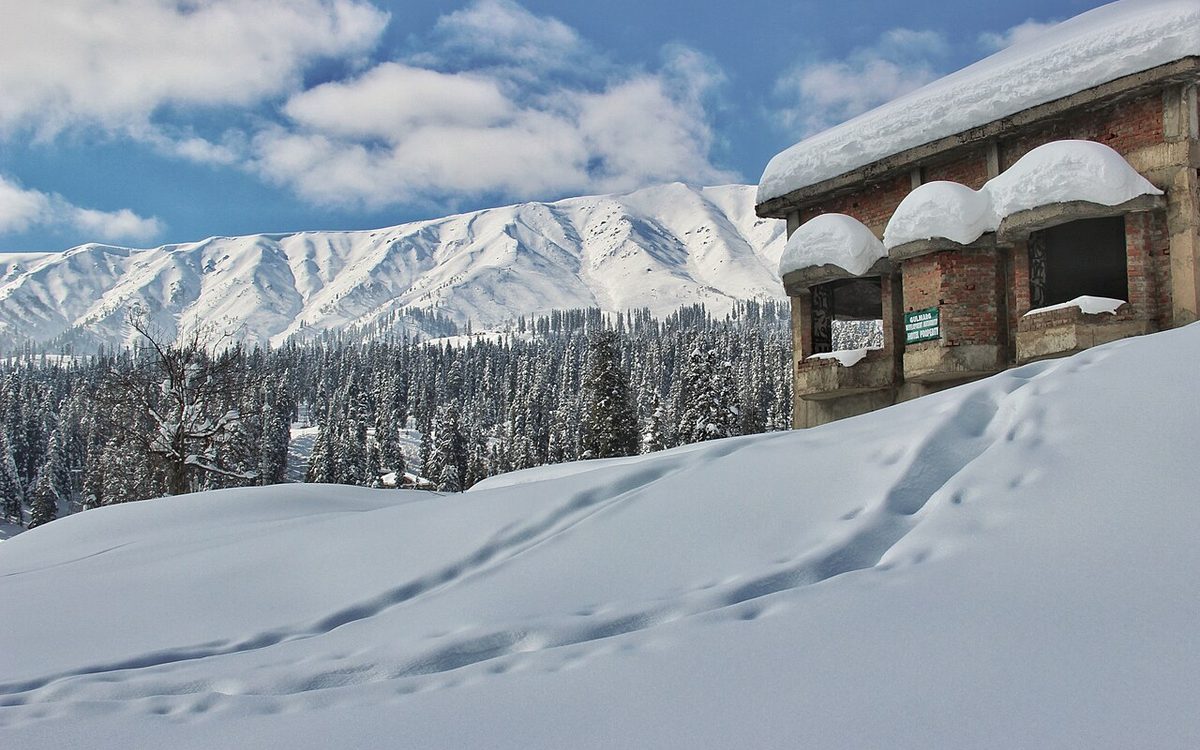
Winter is serious cold, with snow in Srinagar some years and heavy snow in Gulmarg and Pahalgam. If you are coming for the snow and skiing, you need real gear, not a city jacket.
- Insulation: thermals top and bottom, a heavy fleece or wool sweater, and a proper insulated down jacket.
- Extremities: a warm wool hat, insulated waterproof gloves, and thick wool socks. Most of your warmth is lost from head, hands, and feet.
- Footwear: waterproof, grippy snow boots. Ordinary sneakers soak through and slip on ice within minutes.
- Snow days: waterproof trousers or a shell over your layers if you plan to play in deep snow or ski.
Our piece on Kashmir in winter goes deeper on the ski gear and snow logistics if a white trip is the plan.
Spring (March to April)
Spring brings the tulips and the blossom, with warming days and still-cold nights, plus the chance of rain.
- Clothes: light layers you can build up, since mornings and evenings stay cool.
- One warm jacket for the evenings and any trip up to the higher meadows, which are still cold.
- Rain protection: spring is one of the wetter times, so pack a raincoat or umbrella and water-resistant shoes.
Footwear, the thing people get wrong
Whatever the season, comfortable, closed, grippy shoes earn their place every day. You will walk gardens, boulevards, and uneven mountain paths. In winter, waterproof snow boots are non-negotiable. For any light trekking, bring broken-in trekking shoes rather than new ones that will blister you on day one.
A quick tip from experience: break in any new footwear at home for a week before the trip. Kashmir is a walking destination, and nothing ruins a day on Dal Lake or in Betab Valley faster than a fresh blister.
Documents, medicines and electronics
Pack the boring things properly and the trip runs smoothly.
- Documents: a government photo ID for every traveller, printed and digital copies of bookings, and a few passport photos, which some permits and treks still ask for.
- Medicines: your regular prescriptions in original packaging, plus a small kit with painkillers, something for an upset stomach, cold and allergy tablets, and any altitude basics if you are going high.
- Electronics: phone, chargers, a power bank, and a universal plug if you are visiting from abroad. Power cuts happen, so a power bank is genuinely useful.
- Connectivity: postpaid SIMs tend to work more reliably than prepaid ones in the valley, and signal can drop in remote areas, so download offline maps before you head out.
Dressing with respect, and buying local
Kashmir is warm and welcoming, and a little cultural care goes a long way. Modest, covered clothing is appreciated, especially at shrines and in villages. There is no strict rule for tourists, but shoulders and knees covered is a comfortable default for everyone.
You do not have to carry everything from home either. The valley is famous for exactly the warm things you will want. A soft pashmina shawl, a hand-knitted sweater, or a traditional phiran bought locally keeps you warm, supports local artisans, and doubles as a gift. Buying a warm layer on arrival is often smarter than overpacking one.
A quick checklist
If you remember nothing else, carry these: layered clothing for the season, at least one proper warm jacket, grippy closed shoes (snow boots in winter), rain protection, sunscreen and sunglasses, a power bank, your ID and booking copies, and a small medical kit. Add gloves and a wool hat for any trip between late autumn and early spring.
Pack light, pack right
Kashmir rewards travellers who pack smart rather than heavy: a few good layers, the right shoes, and the small essentials beat a suitcase of clothes you never wear. Match your list to the season, leave room to buy a shawl you will fall in love with, and you are set. For help pinning down exactly when to come and what the weather will do, start with our guide to the best time to visit Kashmir.